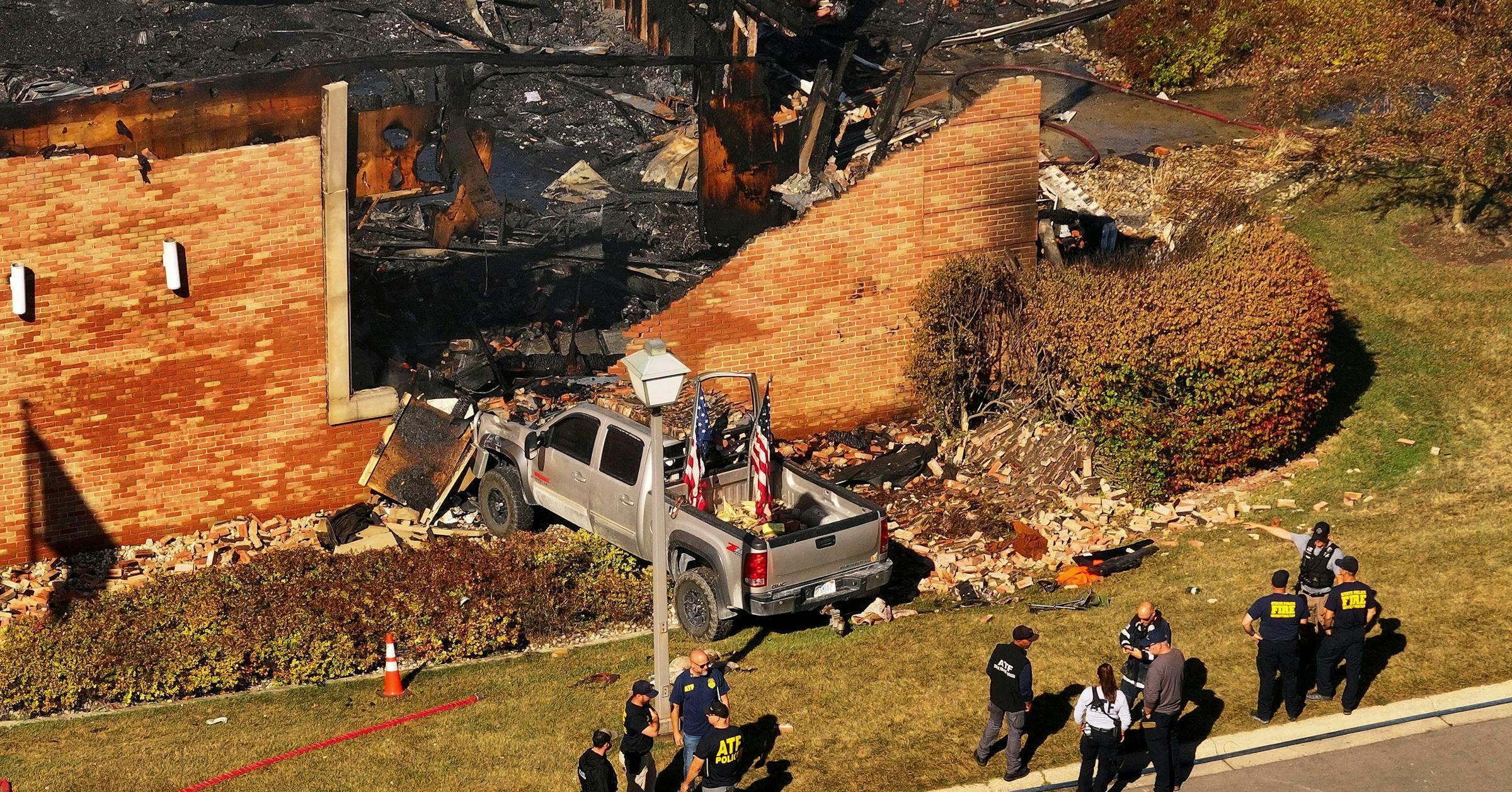
Violence based on ideological differences has become so normalized that I wasn’t surprised to learn that while I was sitting in my pew in Bloomington, thinking about the life of our church president who had passed the night before and enjoying the annual children’s program, in Michigan my fellow church members were fleeing violence, death and fire (“4 dead in church shooting, fire,” Sept. 29).
I knew it was just a matter of time until my church was targeted. Why? Because violence in speech and action have been normalized. Because we have so many church buildings in the country. Because there is an unreasonable hatred for members of the Church of Jesus Christ of Latter-day Saints. People call us rigid, yet I don’t know of any other faith that believes that everyone will go to heaven. They call us Antichrists, yet we study the life of Christ and try to live according to his teachings. They call us “Mormon” because they don’t respect us enough to use our legal and preferred name. They don’t know that “Mormon” was originally a derogatory term used by people in the 1800s, especially those in Missouri who feared our pre-Civil War abolitionist beliefs and murdered, raped and drove our people out of their homes before making it legal from 1838-1976 to kill a “Mormon” in Missouri.
Am I angry? Yes! I’m angry that our culture has normalized violence and hating our neighbor, that we allow the disparagement of entire groups of people and that we allow hateful speech. I’m angry that respectful debate and discourse has disappeared from our politics and news systems. No one has the right to commit violence, forcefully silence their detractors or make jokes at the expense of a group you don’t belong to. Hate is not acceptable.
The only way to make changes is to take action. Take a moment to reflect. Instead of judging, ask questions. Seek for holy envy, not just in other’s religions but their politics, cultures and identities. Support those who support peace and dialogue not judgment and ridicule. Show love to your neighbor and even your enemy. The only safe way to destroy an enemy is to make him your friend. Make friends.
UnitedHealthcare recently informed us that we would no longer be considered “in network” for its Medicare Advantage plans just as it has done with countless physicians across the state and country. This means that seniors who have trusted us for years must suddenly scramble to find new specialists — many of whom are already booked out months in advance. In rural communities we serve, such as Faribault, Sandstone and Lindström, the disruption is especially severe.
Communication from insurers has been confusing and inconsistent. Many patients don’t realize until it is too late that their plans will no longer cover their longstanding physicians. Seniors are left bewildered, anxious and, in some cases, without timely access to care. The situation is more dire this year with UCare exiting the Medicare Advantage plan market at the end of this year.
As health insurance premiums are set to skyrocket, and rural hospitals face cuts in services or even closure, President Donald Trump and congressional Republicans chose to close the government rather than fix these important issues (“‘Alarming’ hike for insurance premiums,” Oct. 2). My premiums are set to almost double, and the local hospital is in the crosshairs, so this is a critical issue for those of us living in rural Minnesota. Instead of governing seriously, Republicans, who control every lever of government, have decided to inflict even more pain on the American people. The fact that they are lying about their reasons for the government shutdown show that they know it is wrong. The request to prevent a spike in health care premiums has nothing to do with undocumented immigrants; they do not get these benefits. That is the law. Rural hospitals facing closure are not run for “illegals”; they serve us and our communities.
So, while there is money for a gaudy ballroom being constructed for Trump, there is no money to help us. There are billions to bail out Trump’s ally in Argentina (who is selling soybeans to China while our farmers suffer), there is no money for us. While there is money to pay Immigration and Customs Enforcement, which is responsible for allegedly beating a 79-year-old U.S. citizen and business owner in Los Angeles, there is no money for us.
Telehealth is no longer an experiment. What started as a pandemic necessity has become a lifeline that improves access and helps people receive care when and where they need it most. Patients depend on it. Providers like me rely on it. As a psychologist with M Health Fairview, I see firsthand how virtual care brings care closer to people. Yet telehealth flexibilities for our most vulnerable populations continue to be a political football.
Readers Write: Michigan church attack, Medicare Advantage and health insurance changes, RFK Jr.