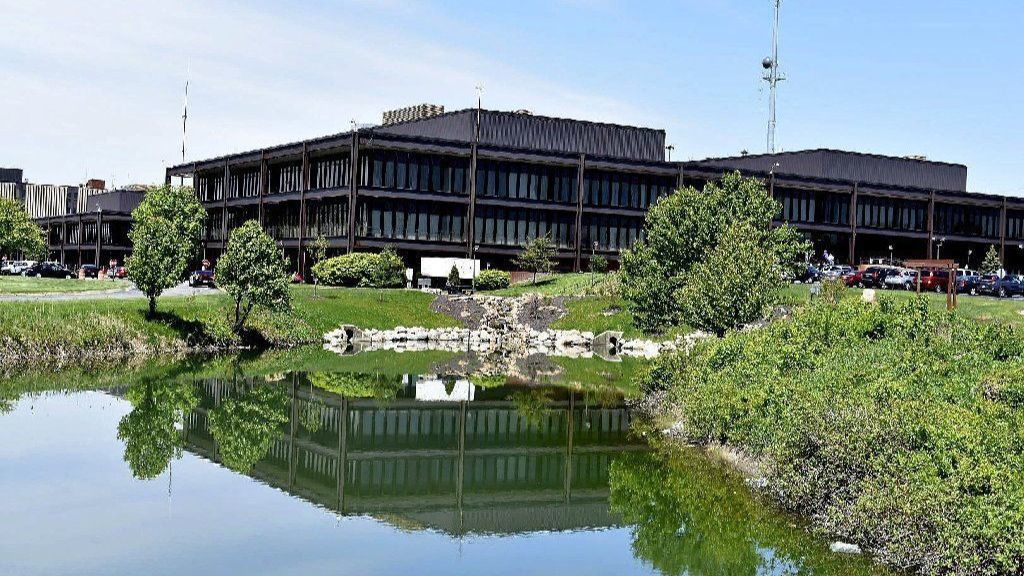
As the Lake County Council approved Tuesday a balanced budget for fiscal year 2026, it failed to pass an elimination of vacant positions before and through January 2025 and a 2% raise for some employees.
Lake County Finance Director Scott Schmal said the budget is balanced at $256 million, so if the budget was amended ahead of the vote, any new spending would have to be offset in a different part of the budget.
Lake County Councilman Ted Bilski, D-6th, proposed a 2% salary increase for non-contract, non-mandated employees that would’ve cost $2 million.
Lake County Councilman Randy Niemeyer, R-7th, said the council should consider eliminating vacant positions before and through January 2025 to cover the cost, especially since the county will see bigger reductions in the budget through 2028 amid Senate Enrolled Act 1.
Council president Christine Cid, D-5th said the council appreciates all county employees and has in the past supported raises for employees. But, Cid said, because of Senate Enrolled Act 1, the council has to decrease spending.
“This is just the year that we don’t have the funding,” Cid said.
Senate Enrolled Act 1 was a property tax bill that will save two-thirds of taxpayers up to $300 on their 2026 property tax bill while local governments will lose $1.4 billion through 2028. Gov. Mike Braun signed the bill into law April 15 and called it a “historic” plan to reduce property taxes for most Hoosier homeowners while limiting future tax hikes and making the tax system fairer and more transparent.
Cid previously said state estimates reflect that Senate Enrolled Act 1 will mean a $30 million reduction in the county’s budget by fiscal year 2028.
“We will be working over the next year to find additional ways to reduce the impact of the anticipated shortfall in order to maintain the services we deliver to the public,” Cid previously said.
Cid said department chairs weren’t asked to reduce their budgets but to maintain their 2025 budgets as the county established its 2026 budget.
The balanced 2026 budget was achieved, in part, by eliminating vacant positions before and through January 2024, Schmal said. If the council were to eliminate vacant positions before and through January 2025, the county would see a $1 million savings, but it would only cover half of the proposed 2% raise.
Lake County Councilman Pete Lindemulder, R-4th, said he wouldn’t support the 2% raise if it can’t be covered in the budget.
“I don’t want to start setting a precedent of dipping into our cash because that will start to dwindle, and I don’t think that’s the right way to balance the budget,” Lindemulder said.
Bilski said his concern with eliminating vacant positions before and through January 2025 are in offices like the assessor’s office where some positions are leveled — like a Level 2 or Level 3 assessor. If a Level 2 assessor goes through schooling to become a Level 3 assessor, that person couldn’t advance if the vacant Level 3 position is eliminated, he said.
Cid said if the higher level position isn’t available, the employee would have to wait until a higher level position becomes available.
When it comes to eliminating positions before and through January 2025, Cid said the potential elimination of those positions is better than laying off current employees.
“We’re going to be looking for money. I’ve sent a memo out saying you need to cut next year 10%. We’re being lenient with that amount,” Cid said. “To me, isn’t it better to eliminate positions where a person is not sitting than to perhaps, maybe, have layoffs? Isn’t that a better alternative?”
Ultimately, the 2% raise for non-contract, non-mandated employees failed 2-3, with Cid voting against the motion along with the two Republican councilmembers.
The council also failed to pass two ordinances: an ordinance to eliminate vacant positions before and through January 2025 and an ordinance to immediately eliminate vacant positions before and through January 2024 in separate 3-2 votes.
When the council met to give initial approval to the budget last month, Cid said it voted to eliminate all vacant positions before and through January 2024 effective as of the 2026 budget.
The two ordinances failed because they required four votes in favor to pass, said council spokeswoman Carrie Napoleon. Cid and the two Republican councilmembers voted in favor of both ordinances to eliminate vacant positions.
Ultimately, the council passed the 2026 budget in a 5-0 vote. Councilmen Charlie Brown, D-3rd, and Ron Brewer, D-2nd, were absent.
Cid thanked Schmal for his work on the budget, especially amid the uncertainty of Senate Enrolled Act 1.
“I hope the departments understand that it is not the fault of the council that we cannot give an increase. It is the legislature, so speak to your legislators. Maybe changes can be made,” Cid said.
Earlier Tuesday, during its monthly meeting, the council gave final approval to rescinding a 2020 ordinance making it the county’s purchasing agency to align with state law.
Council attorney Tom O’Donnell said Thursday the Indiana State Board of Accounts requested that the ordinance be “cleaned up” to follow state law. He recommended that the council rescind the ordinance.
In 2023, a state law specific to Lake County states that the county executive — the commissioners — not the county judiciary — the council — is the county purchasing and data processing agency.
In 2020, former councilman Christian Jorgensen, R-St. John, proposed the council draft ordinances giving it authority over purchasing and data processing citing a state law from the 1980s that gave the council authority in those two areas.
Jorgensen argued that the council should have authority over purchasing because of “the incessant squabbling” over purchases between the Lake County Sheriff’s Department and the Lake County Board of Commissioners. He said the council should have authority over data processing after the county’s software systems were hacked in 2019.
After the council approved the ordinances, the commissioners vetoed the ordinances because they “violate the separation of power” between the executive and legislative branches of county government, commissioner’s attorney Matt Fech said at the time.
The council overrode the veto, and after taking the issue to court retained control over purchasing and data processing.
“(The council is) rescinding the ordinance since it is no longer relevant due to the change in state law,” Cid said in a statement Tuesday.
Lake County Council passes balanced 2026 budget, but declines raises as it braces for new property tax law