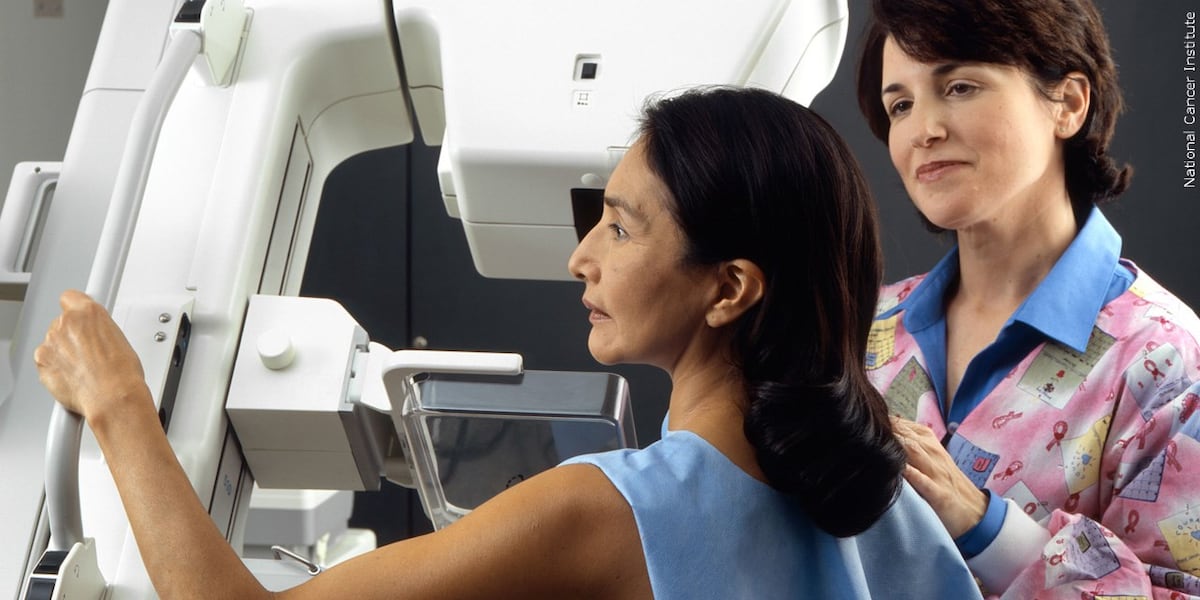
COLUMBIA, S.C. (WIS) – Throughout the year, but especially in October, doctors remind women of the importance of getting their annual mammogram.
It saves lives, but a report from the American Cancer Society shows hundreds of thousands of Americans are skipping equally critical follow-up exams for breast cancer every year.
Costs may drive those delays: While federal law requires insurance companies to cover mammograms for women over 40, many private insurers do not pay the complete cost for further diagnostic tests.
“Financial toxicity is what cancer patients say they fear most, more than the disease, and I felt that,” Sundi Herring of North Charleston said. “I felt that. I mean, I have worked really hard to provide for my family. I did not want to be a burden on them.”
Before a mammogram led to Herring’s breast cancer diagnosis a few years ago, it led to cost after cost that her insurance did not fully cover — several biopsies, MRIs, and sonograms, then eventually a double mastectomy.
“It was enough to clear out our savings,” she said.
Herring said family support and a flexible job helped her out, but she still worried, especially with two school-age children.
She’s not alone, with breast cancer diagnosed more in South Carolina than any other cancer.
A study from the American Cancer Society found South Carolinians’ out-of-pocket costs for follow-up breast cancer screenings are the sixth-highest among all states, with patients, on average, footing 43% of their bill.
“I feel like it makes you just want to give up hope when you hear that these costs could — what if you lost your house? What if your kids couldn’t go to college?” Herring said, noting insurance deductibles and premiums keep rising for many. “Just to catch something early shouldn’t be this much work.”
A bipartisan bill filed at the State House would require insurance companies in South Carolina cover the costs of follow-up tests that a doctor believes someone needs after a mammogram.
That could be because the doctor spotted something concerning, or because the patient has a family history of breast cancer or is at higher risk of it.
“That screening could mean the difference between early-stage and late-stage diagnosis,” Beth Johnson with the American Cancer Society Action Network said. “The outcome in cost but also quality of life is significant if cancer is detected early.”
The bill did not get a hearing at the State House last year, the first of a two-year legislative session, but lawmakers can pick it up when they return to Columbia in January.
“While, fortunately, I have no history with breast cancer, I have friends who have struggled with this disease,” Rep. Sylleste Davis, R – Berkeley and the bill’s lead sponsor, said. “It is important to me to do what we can, knowing the odds are in our favor, given that early detection is available and results in more lives saved at a lower cost. I look forward to the debate.”
This would not apply to Medicaid recipients because their costs are already covered for follow-up exams.
More than two dozen other states have this type of coverage mandate in place.
According to the American Cancer Society, 70% of women in the US experience cost barriers that could keep them from lifesaving follow-up screenings.
“Women are going in; they have that access to care. They have that opportunity to meet with their physician, to have that follow-up test. Then not only do we see cancer being detected earlier, but we see the survivor rate, which is much higher,” Johnson said.
Herring said the words, “Your cancer was caught early,” gives patients hope.
“The only way we’re going to make sure women hear those words, too, is if we continue to support them getting to those annual mammograms and continuing through their biopsies,” she said.
Feel more informed, prepared, and connected with WIS. For more free content like this, subscribe to our email newsletter, and download our apps. Have feedback that can help us improve? Click here.
SC lawmakers want to eliminate cost barriers to breast cancer exams