
With Visa and Mastercard recently reaching a settlement on a two-decade legal battle with merchants, credit card merchant fees are suddenly in the spotlight – and consumers may find their rewards cards far less rewarding.
But it’s not just credit card loyalty that’s at stake; it’s also merchant loyalty.
To be clear, “merchant” is an industry team that refers to any business that accepts credit cards – restaurants, retailers, hotels, entertainment venues, etc. It includes both small businesses and multinational companies located anywhere in the world.
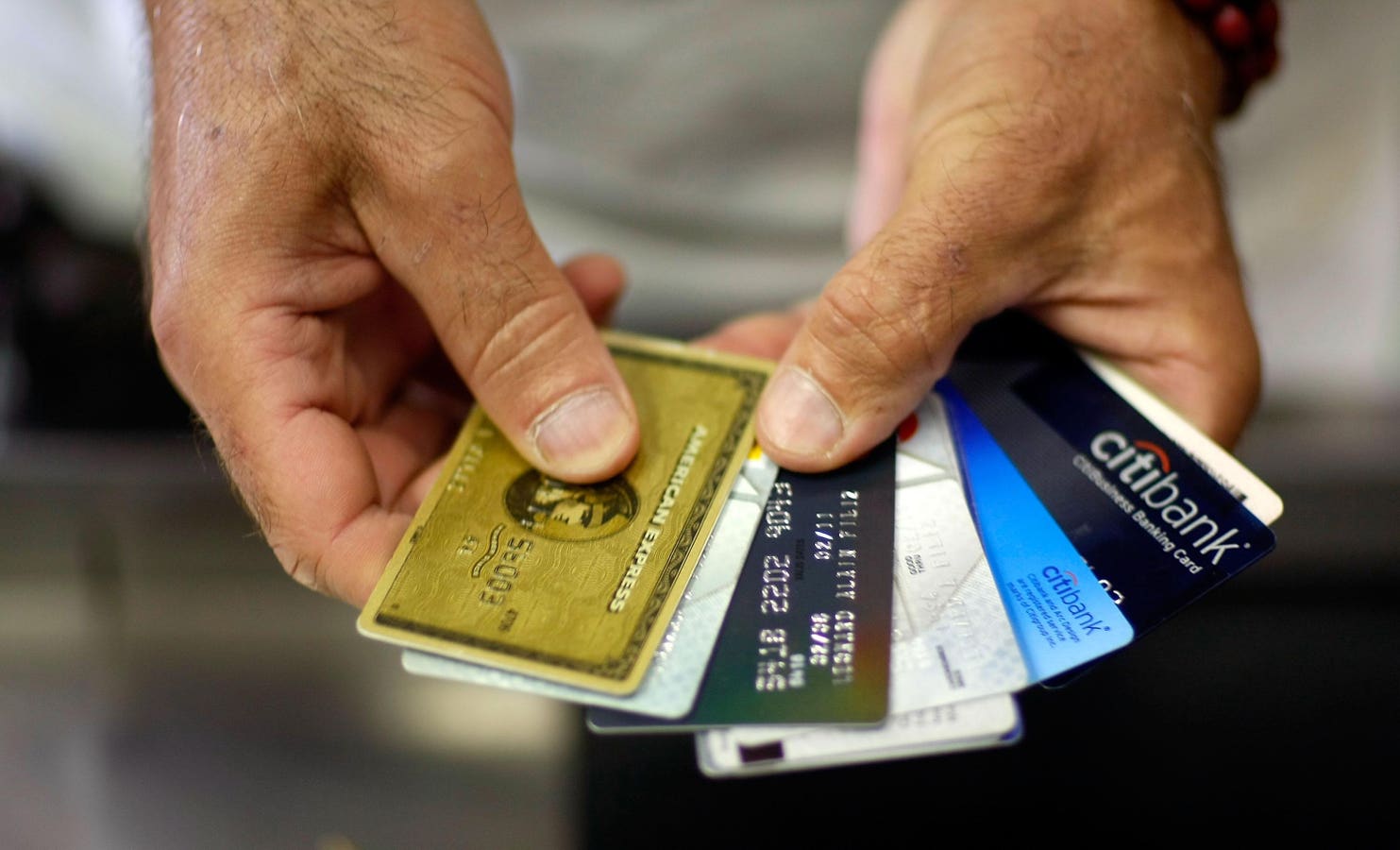
Traditionally, the fees that merchants pay to credit card networks such as Visa, Mastercard, Discover, and American Express help fund the increasingly-rich rewards programs on many credit cards. So those miles, points and cash back programs that consumers have come to love – and that create so much loyalty to certain cards – are actually paid for by all the places they shop.
Now with this settlement, merchants may have the option to decline certain cards. The two smaller networks – AMEX and Discover – struggled with acceptance rates for years, though today both are accepted at 99% of U.S. merchants. But never before have merchants had the power to decline specific credit card products, such as (for example) the AMEX Platinum, Chase Sapphire Reserve, or Citi/AAdvantage Executive World Elite Mastercard.
How Credit Card Merchant Fees Are Forcing Merchants to Choose Between Profit and Loyalty
Imagine walking into your favorite shoe store, trying on a few pairs, choosing your favorites, and then heading to the checkout counter – only to find out that they won’t accept your favorite credit card. Keep in mind, it’s not that they can’t accept it, it’s that they’ve decided they won’t accept it.
MORE FOR YOU
Why would a merchant make this decision? One reason: cost. Credit card merchant fees generally range from 1.5% to 4% of the transaction value, depending on the network, the card type, the annual transaction value of the merchant, and even the merchant category. Typically these fees are all blended into a single monthly statement, but going forward it’s likely they’ll need to be broken out by card type. And once that happens, it will be much easier for a merchant to choose which cards they want to pay for and which ones they don’t.
The challenge for merchants, though, is that by refusing to accept a certain card, they risk alienating their customers. Sure, a customer might just reach into their wallet for a different card – assuming that one is accepted – but they just as likely might decide to order online or at a different retailer. After all, those Nikes you just brought to the counter can be purchased at many other places.
So is it worth the risk? I don’t think so. Customers’ loyalty to their credit cards (and often the underlying cobrand, such as an airline or hotel) is likely stronger than their loyalty to the merchant, especially with so many options and low switching costs.
Consumer Payment Behavior Is Changing
According to the Federal Reserve’s 2025 Diary of Consumer Payment Choice, payments have been trending toward credit cards, debit cards, and mobile payment apps for several years. While the overall pie is expanding with more and more transactions, the use of cash is not. Among the study’s findings:
In 2024, cash accounted for just 14% of all consumer payments, while credit and debit cards accounted for 35% and 30%, respectively.
U.S. consumers made an average of 11 payments per month with a mobile phone in 2024, up from four in 2018.
Nearly 80% of U.S. consumers still hold cash in their pockets, purses or wallets for at least one day of the month.
Not surprisingly, younger generations have shied away from cash more quickly. As a parent of teenagers, I’ve witnessed firsthand that Gen Z has no use for cash, often exchanging it with the familiar refrain, “Can you Venmo me?”.
What this means for merchants is that if they try to force consumers to use cash so they can save the transaction fees, they’re likely going to run into resistance.
Credit Card Merchant Fees Are a Customer Experience Issue
At Comcast’s headquarters in Philadelphia, every executive’s office and every conference room has a chair with the word “CUSTOMER” emblazoned on it. The idea is that every business decision should be made with the customer in mind, and the chair is a visual reminder.
Yet most business decisions are made by finance teams that never engage directly with customers. They’re based on spreadsheets and analysis and financial projections, without thinking about the direct impact on customers. This is a dangerous practice, and one that is easily fixed.
When companies put customers at the center of everything they do, and make business decisions though the filter of customer impact, they almost always make better business decisions. Because happy customers spend more, stay loyal longer, and tell others about their experience. And that benefit far exceeds the cost.
The Smart Way to Handle Credit Card Merchant Fees Without Alienating Customers
I worked at Discover Card for nearly a decade, before the acceptance rate hit 99%. Whenever I encountered a restaurant or retailer that didn’t accept Discover, I always wondered why they’d stand in the way of a customer paying them. Giving someone money should be the easiest part of any customer journey.
That’s why, even as a solopreneur with a five-figure keynote speaking fee, I allow clients to pay by credit card if they wish. Very few actually do, and the goodwill earned from the client scoring those coveted rewards points far exceeds the small hit to the bottom line. I even joke in my contracts that I’ll accept rolls of quarters, though no one has taken me up on that yet.
So what should businesses do? Credit card merchant fees are a cost of doing business, just like rent, insurance, and utilities. Merchants should continue to accept all cards, but offer a discount to those paying in cash. Usually it’s the other way around: credit card users often get hit with an upcharge equivalent to the credit card merchant fee. But by offering a discount instead to cash users, merchants can reward desired behavior without penalizing the majority of their customers.
Credit Card Merchant Fees Could Get Your Premium Card Rejected


RELATED ARTICLES