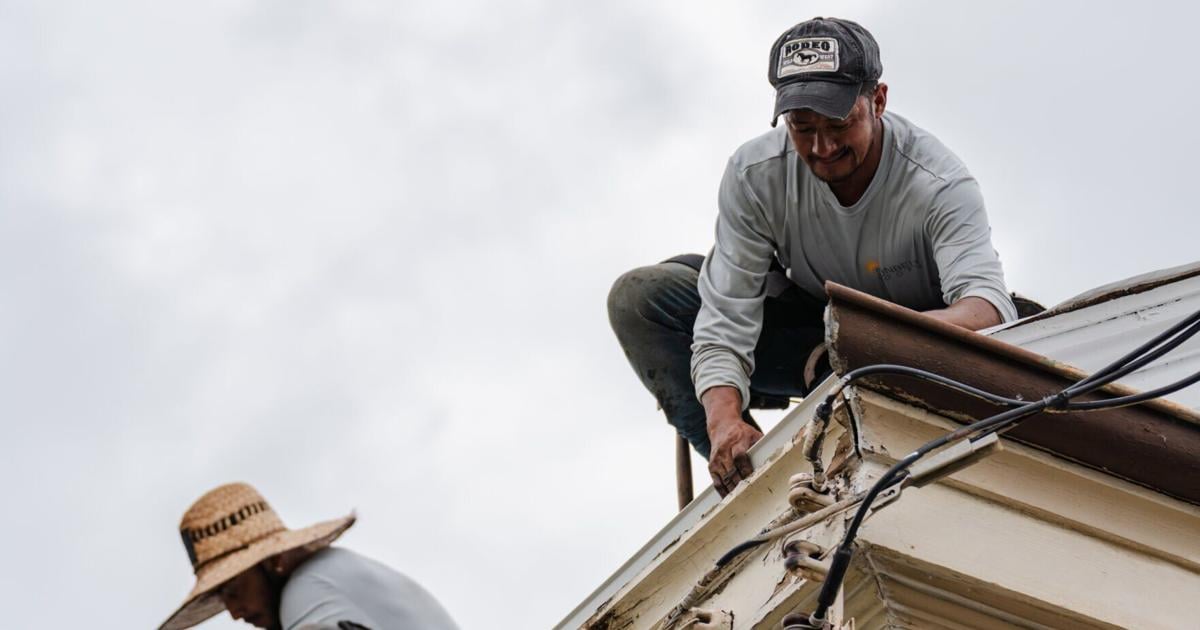
Gov. Jeff Landry is asking the state-created Louisiana Workers’ Compensation Corp. to use its balance sheet to help pay for stronger roofs for homeowners in a bid to alleviate a homeowners insurance crisis that has proved an enduring political problem.
Landry, in a letter to LWCC’s leadership dated Monday, noted that the nonprofit company has sizable reserves and is in a strong financial position.
He said unaffordable property insurance is threatening the state’s economy, and asked LWCC to commit “a portion of its excess reserves” to help pay for fortified roofs, particularly for homeowners covered by Citizens, the insurer of last resort.
“LWCC was created to solve a market failure through state enabled action,” he wrote, referring to the Legislature’s creation of the nonprofit in the 1990s to stabilize a tumultuous workers’ compensation sector. “It now possesses the financial capacity, flexibility and institutional credibility to help solve another.”
Landry didn’t specify how much in funding he wants LWCC to dedicate to fortified roofs, or where exactly the money would go. But the Louisiana Department of Insurance spends about $30 million a year on grants to homeowners to help put fortified roofs on their homes, which typically leads to lower home insurance costs.
It’s also not clear whether the LWCC board can legally send money to fortified roofs, or whether it would require a new law. An LWCC spokesperson didn’t respond to messages seeking comment.
The company is a mutual insurer, meaning it returns its profits to policyholders, which are businesses who get workers’ compensation insurance through the firm.
The Times-Picayune reported last week that while the state grant program has helped many in Louisiana adopt stronger roofs, it is not nearly keeping up with demand. State data shows that only about 20% of homeowners who registered in lotteries for the program received a grant.
The LWCC is run by a board of directors that include Louisiana Insurance Commissioner Tim Temple, state lawmakers, and several members appointed by the governor. Boysie Bollinger, a business owner and donor to Landry and other politicians, is also a member.
Financials filed with regulators show the LWCC has been strong enough financially to deliver significant profits to its policyholders in recent years. From 2020 to 2024, the firm sent more than $540 million in dividends to policyholders, documents show.
The company had about $1.6 billion in assets that year, mostly in bonds, and had a $901 million surplus.
The Louisiana Association of Business and Industry, which represents thousands of Louisiana companies and has a seat on the LWCC board, declined to comment.
Fortified roofs — which use better materials and techniques and include a verification system to make sure they’re built right — have emerged as a bipartisan solution to the ongoing insurance crisis.
After a series of hurricanes in 2020 and 2021, a dozen insurers doing business here went belly up. The reinsurance market, responding to the rising threat of extreme weather because of human-caused climate change, as well as inflation, raised costs on insurers significantly.
As a result, tens of thousands of homeowners in south Louisiana have faced staggering property insurance hikes, and huge numbers were forced onto the rolls of Citizens, which charges higher rates by design.
The Legislature last year also set up a tax credit program for people who pay for a fortified roof on their own dime, and established a system where $30 million a year flows to the grant program from revenue generated by the Insurance Department.
Still, some housing advocates and lawmakers have called for more action, including more funding for roofs.
Aside from fortified roofs, Temple has ushered in a series of policies that loosened rules on insurers, making it easier to raise rates and drop policyholders. Rates are still rising but not by the double-digit amounts seen in previous years, in part because the reinsurance industry saw a flood of capital that is driving down costs of protection.
Jeff Landry asks insurer to pay for fortified roofs