
To place an obituary, please include the information from the obituary checklist below in an email to obits@pioneerpress.com. There is no option to place them through our website at this time. Feel free to contact our obituary desk at 651-228-5263 with any questions.
General Information:
Your full name,
Address (City, State, Zip Code),
Phone number,
And an alternate phone number (if any)
Obituary Specification:
Name of Deceased,
Obituary Text,
A photo in a JPEG or PDF file is preferable, TIF and other files are accepted, we will contact you if there are any issues with the photo.
Ad Run dates
There is a discount for running more than one day, but this must be scheduled on the first run date to apply.
If a photo is used, it must be used for both days for the discount to apply, contact us for more information.
Policies:
Verification of Death:
In order to publish obituaries a name and phone number of funeral home/cremation society is required. We must contact the funeral home/cremation society handling the arrangements during their business hours to verify the death. If the body of the deceased has been donated to the University of Minnesota Anatomy Bequest Program, or a similar program, their phone number is required for verification.
Please allow enough time to contact them especially during their limited weekend hours.
A death certificate is also acceptable for this purpose but only one of these two options are necessary.
Guestbook and Outside Websites:
We are not allowed to reference other media sources with a guestbook or an obituary placed elsewhere when placing an obituary in print and online. We may place a website for a funeral home or a family email for contact instead; contact us with any questions regarding this matter.
Obituary Process:
Once your submission is completed, we will fax or email a proof for review prior to publication in the newspaper. This proof includes price and days the notice is scheduled to appear.
Please review the proof carefully. We must be notified of errors or changes before the notice appears in the Pioneer Press based on each day’s deadlines.
After publication, we will not be responsible for errors that may occur after final proofing.
Online:
Changes to an online obituary can be handled through the obituary desk. Call us with further questions.
Payment Procedure:
Pre-payment is required for all obituary notices prior to publication by the deadline specified below in our deadline schedule. Please call 651-228-5263 with your payment information after you have received the proof and approved its contents.
Credit Card: Payment accepted by phone only due to PCI (Payment Card Industry) regulations
EFT: Check by phone. Please provide your routing number and account number.
Rates:
The minimum charge is $162 for the first 12 lines.
Every line after the first 12 is $12.
If the ad is under 12 lines it will be charged the minimum rate of $162.
Obituaries including more than 40 lines will receive a 7.5% discount per line.
On a second run date, receive a 20% discount off both the first and second placement.
Place three obituaries and the third placement will be free of charge.
Each photo published is $125 per day. For example: 2 photos in the paper on 2 days would be 4 photo charges at $500.
Deadlines:
Please follow deadline times to ensure your obituary is published on the day requested.
Hours
Deadline (no exceptions)
Ad
Photos
MEMORIAM (NON-OBITUARY) REQUEST
Unlike an obituary, Memoriam submissions are remembrances of a loved one who has passed. The rates for a memoriam differ from obituaries.
Please call or email us for more memoriam information
Please call 651-228-5280 for more information.
HOURS: Monday – Friday 8:00AM – 5:00PM (CLOSED WEEKENDS and HOLIDAYS)
Please submit your memoriam ad to memoriams@pioneerpress.com or call 651-228-5280.
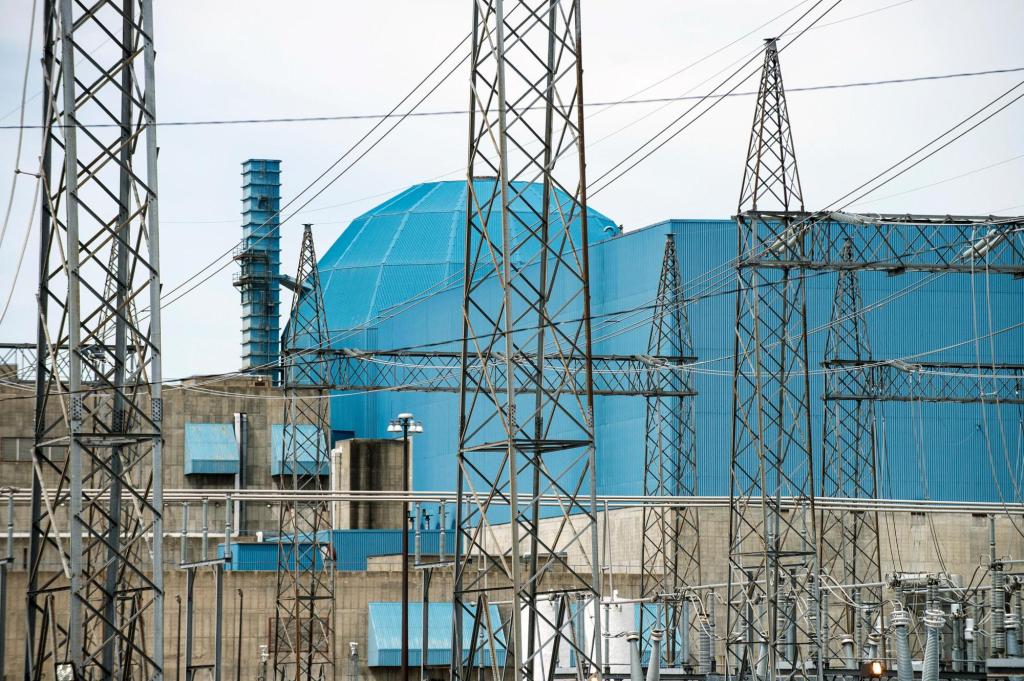
As America’s energy demands grow exponentially, the country won’t be able to keep up without more nuclear power. For decades, the climate-friendly industry has been held back by overly burdensome regulations, but that’s beginning to change.
In the 1960s, plants took about four years to build, and they cost, in today’s dollars, about $1,500 per kilowatt of electricity generated. Now the idea of building a reactor in less than a decade is unheard of, and the cost of construction is six times greater.
The Energy Department took steps last month to exempt certain advanced reactors from duplicative environmental reviews. It’s also flirting with relaxing radiation standards and eliminating some over-the-top security requirements at nuclear plants.
Defenders of the status quo try to prey on people’s fears of nuclear technology. NIMBYs and radical environmentalists pretend that overregulation is not actually the reason for the industry’s malaise and is instead necessary to instill public confidence.
This ignores the many undue burdens that federal agencies have placed on projects. Sometimes, regulators have even forced changes to designs mid-construction, as happened in 2009, when they required containment buildings for reactor developments in Georgia and South Carolina to be able to withstand direct aircraft strikes, driving up costs and delaying construction.
It’s no surprise that regulatory costs surged after the 1979 accident at Three Mile Island, but the pendulum has swung too far. Nuclear developers have a point about onerous documentation rules. The administration would do well to emphasize regulatory stability, as well as explore how technology such as artificial intelligence can help alleviate paperwork burdens.
Capital is already pouring into the nuclear industry from big firms like Meta, Microsoft and Amazon, which was founded by Washington Post owner Jeff Bezos. Yet billions in new investment won’t mean much if the regulatory state refuses to challenge long-held norms.
Take, for example, the government’s overly stringent radiation standards. The Trump administration has indicated it will reform a decades-old rule requiring nuclear power plants to keep levels of exposure to radiation “as low as reasonably achievable.”
The rule has led hypercautious regulators to mandate that plants minimize exposure to well below levels that people experience annually from the natural world, such as from the sun. That has forced operators to incorporate concrete shields into their reactor designs, which raise costs and limit how long employees can work at a given time.
The science underpinning the radiation rule is mushy, at best. It’s based on a theory that because radiation poses a serious cancer risk at high doses, it must also pose a low risk at lower doses. But researchers have hotly debated whether this is true, which is hard to measure given how many factors contribute to cancer risk. Meanwhile, coal plants are subject to no standards on radiation, even though they release far greater levels of radioactive material to the public than nuclear plants.
No standard should be a be sacred cow, especially as new designs for advanced reactors promise greater safety. Everyone loses when bureaucrats snuff out nuclear innovation.
— The Washington Post
Other voices: In need of nuclear-energy innovation


RELATED ARTICLES