Key takeaways
Cloud financial systems centralize accounting, reporting, and forecasting in one platform
Major vendors include Intuit, Oracle, SAP, Microsoft, and Workday
Automation and integrations improve financial visibility and efficiency
A cloud-based enterprise financial system is software that manages accounting, financial reporting, budgeting, and operational insights through a secure online platform. Instead of running on internal servers, the system operates in the cloud and connects financial data with other business functions. This allows finance leaders to automate workflows, gain real-time visibility into performance, and make more confident decisions.
How to choose a cloud-based enterprise financial system
Identify your financial management needs Determine which capabilities are essential for your organization, such as multi-entity accounting, advanced reporting, or consolidated financial visibility.
Evaluate vendor ecosystems Compare established providers such as Intuit, Oracle, SAP, Microsoft, and Workday to find the right fit for your needs.
Prioritize connected business data Look for platforms that integrate financial, operational, and customer data into a single system.
Assess automation capabilities Automation for tasks such as invoicing, reconciliation, and reporting reduces manual work and minimizes errors.
Check integration flexibility Ensure the platform can connect seamlessly with your CRM, payroll, inventory, and analytics tools.
Confirm scalability for growth The system should support team expansion, manage multiple entities, and adapt to evolving operational needs.
Review reporting and insight tools Choose a solution that offers real-time dashboards and provides clear financial insights to help you make informed decisions.
Leading vendors offering cloud-based enterprise financial system
Use case example: Intuit Enterprise Suite
A fast-growing multi-location services company oversees several subsidiaries, each using different accounting systems. As a result, the finance teams spend significant time consolidating data and producing reports.
Recommended Videos
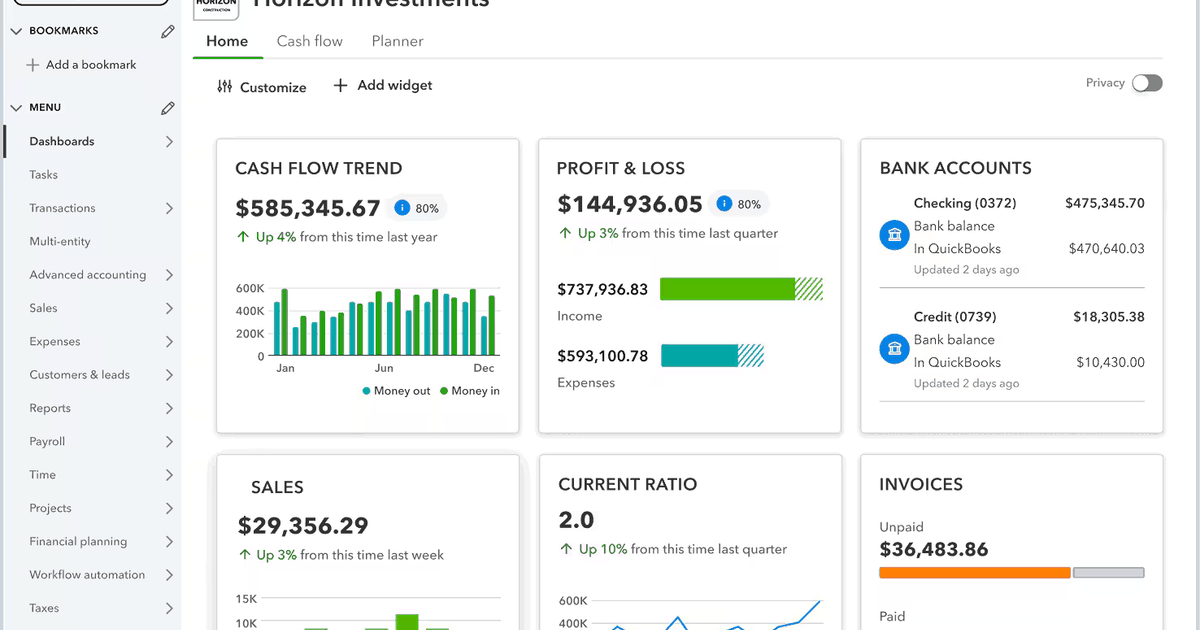
To address this issue, the company implemented Intuit Enterprise Suite, which connects financial and operational data across multiple entities in one unified system. Automated workflows streamline accounting processes, while real-time dashboards provide leadership with clear insights into revenue, costs, and cash flow across the organization.
Integration checklist
Before adopting a cloud enterprise financial system, ensure it integrates with the following:
CRM platforms for revenue tracking
Payroll and HR systems
Inventory or supply chain management software
Business intelligence and analytics tools
Banking systems and payment processors
Tax reporting and compliance software
Best practices and common pitfalls
Choose platforms that support open integrations
Prioritize systems that unify financial and operational data
Use automation to reduce manual accounting processes
Avoid fragmented tools that create data silos
Ensure finance teams receive training and adoption support
FAQ
Which companies offer cloud financial management software?
Major providers include Intuit, Oracle, SAP, Microsoft, and Workday. These vendors offer cloud platforms that handle accounting, financial reporting, forecasting, and compliance, allowing organizations to centralize their financial data and operate more efficiently.
Why are companies adopting cloud financial platforms?
Cloud platforms provide real-time visibility into financial performance and reduce thecomplexity of managing on-premises infrastructure. They also support automation, integrations with other business systems, and scalable architecture that helps organizations manage growth and make faster decisions.
What features should a cloud enterprise financial system include?
Key capabilities should include general ledger management, automated workflows, financial reporting, budgeting and forecasting, and multi-entity support. Modern systems integrate operational data and provide dashboards that help finance leaders understand business performance and plan for growth.
Is cloud financial software secure for enterprise use?
Yes, most enterprise cloud providers use advanced security controls such as encryption, identity management, and regular security audits. Many platforms also provide compliance tools to help organizations meet financial reporting standards and regulatory requirements. However, proper configuration and governance remain important for maintaining security.
Who provides cloud-based enterprise financial systems?


RELATED ARTICLES