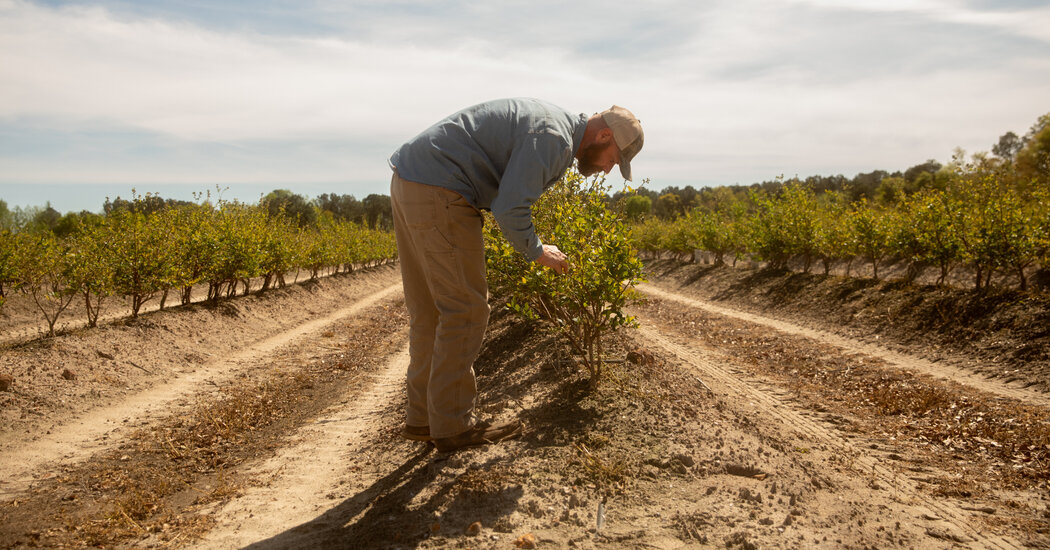
When Covid-19 came to Alma, the blueberry capital of Georgia, Chris Towns was staring down a paltry return on his berry crop as shoppers stayed at home and stuck to buying essentials.
The federal government offered relief, in the form of 30-year, low-interest loans. Desperate to stay afloat, he borrowed $125,000. When another round was offered the next year, he bumped up the amount to $495,000.
“We were looking in the future, if it did turn around, we could have some capital to expand with,” Mr. Towns said. “I saw the purpose of the money as trying to inject money back into the system.”
Then Mr. Towns ran into one of the toughest farming economies in generations. Costs of labor and fertilizer kept rising, and berries weren’t selling for enough to make up the difference. Repeated freezes shrank yields. Hurricane Helene took out half his blueberry plants in 2024.
He’s worried about what might come next: If he gets more than 90 days behind, his loan could be referred to the Treasury Department for collections. The government could intercept any payment from federal agencies, including subsidies from the Agriculture Department. He has been doing everything he can just to cover interest payments, including taking out another loan from a Georgia state agency.
“I’m not making any progress on it,” Mr. Towns said. “I’m never going to get it paid off.”
His troubles are part of a bigger problem plaguing a pandemic relief program that could end up costing taxpayers more than policymakers anticipated. Congress appropriated trillions of dollars to support businesses and workers as the pandemic rampaged through the economy. Most of it came in the form of grants, unemployment payments and forgivable loans.
Thank you for your patience while we verify access. If you are in Reader mode please exit and log into your Times account, or subscribe for all of The Times.
Thank you for your patience while we verify access.
Already a subscriber? Log in.
Want all of The Times? Subscribe.
Covid Relief Loans Are Haunting Small Businesses