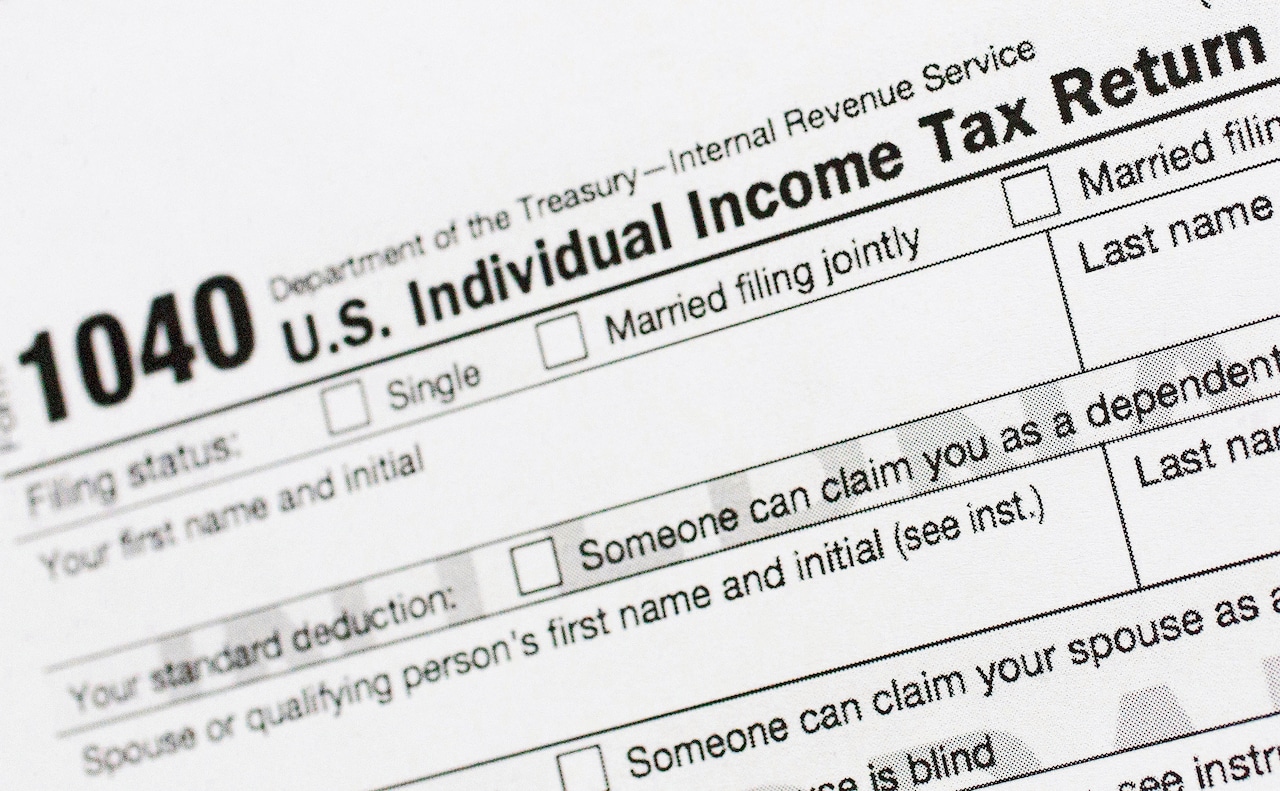
With tax season in full swing, the Internal Revenue Service released a new schedule and instructions for how taxpayers can claim significant new benefits that can save them thousands. The tax benefits were part of the “One, Big, Beautiful Bill,” which was signed into law last year. These benefits include provisions for no tax on tips, no tax on overtime, no tax on car loans, and an enhanced deduction for seniors.
To help taxpayers understand how to claim those benefits, the agency released Schedule 1-A PDF and related instructions within the Form 1040 Instructions PDF. The schedule gives taxpayers the necessary framework and guidance to claim the tax breaks, regardless of whether they use the standard deduction or an itemized one.
Related story: Tax refunds are up double digits so far in 2026. What does that mean for you?
What to know about “No tax on tips. No tax on overtime”
As part of the law, taxpayers who collect tips through qualified employment, such as servers, hair stylists, and valet attendants, can deduct up to $25,000 in reported tips. The benefit phases out for individuals who make more than $150,000 and $300,000 for couples who file jointly.
A similar benefit is available for qualified overtime pay. That deduction is capped at $12,500 ($25,000 for joint filers) and is subject to the same income thresholds as the tip benefits. Both of these options require married taxpayers to file jointly to qualify for the deduction.
The new schedule released by the IRS lays out exactly what information taxpayers need in order to claim the deduction and shows them how much it is worth.
No tax on car loans
Taxpayers can also deduct interest paid on certain car loans under the new law. The new schedule defines terms used to claim the credit such as “qualified passenger vehicle loan interest,” “applicable passenger vehicle,” “final assembly in the United States,” and “personal use.” The instructions PDF provides examples so taxpayers can see what vehicles qualify for the benefit.
Generally speaking, the benefit allows for a deduction of up to $10,000 for interest paid on a qualified vehicle purchased in 2025. Taxpayers who earn more than $100,000 ($200,000 if filing jointly) will see the benefit reduced. The benefit is reduced by $200 for every $1,000 over the income threshold, and is not available for individuals who make more than $150,000 or couples who make more than $250,000.
Related story: Free IRS tool tells you when you can expect to receive your 2026 tax refund
Enhanced tax deduction for seniors
A new deduction is available for seniors born before January 2, 1961 as long as they have a valid Social Security number. A $6,000 per person deduction is available for those who file individually, and $12,000 for couples filing jointly as long as both people meet the criteria.
The benefit begins phasing out for taxpayers who make more than $75,000 ($150,000 for married joint filers).
Taxpayers have until April 15, 2026, to file their 2025 return, or they may be subject to fines and penalties.
IRS releases 2026 tax deduction guide: Tips, overtime, car loans