In Los Angeles, youth has always been a currency. But in 2026, longevity – not youth – may be the real growth market.
Across Southern California, biotech labs, healthtech startups, venture capital firms and concierge medical platforms are converging around a single thesis: Aging is no longer just a biological inevitability; it is a programmable, measurable and investable frontier.
The business of longevity in L.A. sits at the intersection of biotechnology, personalized medicine, AI-driven diagnostics and consumer wellness. What once lived in academic labs is now being packaged into venture-backed platforms, subscription health models and clinical-grade preventive care centers. Investors are no longer just funding treatments for disease; they are funding companies designed to extend healthspan – the number of years people live free from chronic illness.
From Hollywood Wellness to Clinical Longevity
Southern California has long been a wellness trendsetter. But today’s longevity movement differs from the juice cleanses and fitness fads of decades past. It is increasingly data-driven, clinically validated and biotech-enabled.
For example, Prenuvo (with locations in West Los Angeles and Irvine), offers a 45–60-minute, radiation-free, full-body MRI scan designed to detect early-stage cancers, aneurysms and various diseases. Optima Diagnostic Imaging (in Beverly Hills) provides comprehensive cancer screenings, including MRIs, low-dose CT scans, PET/CT and on-site lab work, often delivering same-day results. Elevate Health Group (in Glendale/La Cañada) offers the Galleri blood test for early, multi-cancer detection, which can be combined with body composition or metabolic analysis.
Similarly, Human Longevity Inc. in San Diego has spent years building one of the world’s largest genomic and phenotypic databases. Its thesis is simple: the more data you collect about aging, the more precisely you can intervene. Genomics, combined with machine learning, becomes the backbone of personalized longevity plans.
The shift from boutique wellness to scalable healthtech has made longevity investable. Venture firms are funding platforms that combine diagnostics, AI and recurring care models – mirroring SaaS economics but applied to human biology.
Academic Powerhouses Fueling Commercial Spinouts
L.A.’s longevity ecosystem is strengthened by its academic institutions. Researchers at USC and UCLA are advancing studies in gerontology, stem cell research, neurodegeneration and metabolic health. USC’s Leonard Davis School of Gerontology, in particular, has become a key pipeline for research commercialization.
Medical centers, such as Cedars-Sinai, are also increasingly involved in translational research, partnering with startups to bring regenerative therapies and AI diagnostics to market faster. The proximity of researchers, clinicians and venture capital accelerates spinouts and early-stage funding rounds.
Beyond L.A. proper, the broader California ecosystem includes the Buck Institute for Research on Aging, which continues to influence the science of aging biology. Discoveries in cellular senescence, mitochondrial function and epigenetic reprogramming are moving from bench to boardroom.
Aging as a Platform Market
Longevity is no longer a single product category; it is a platform market.
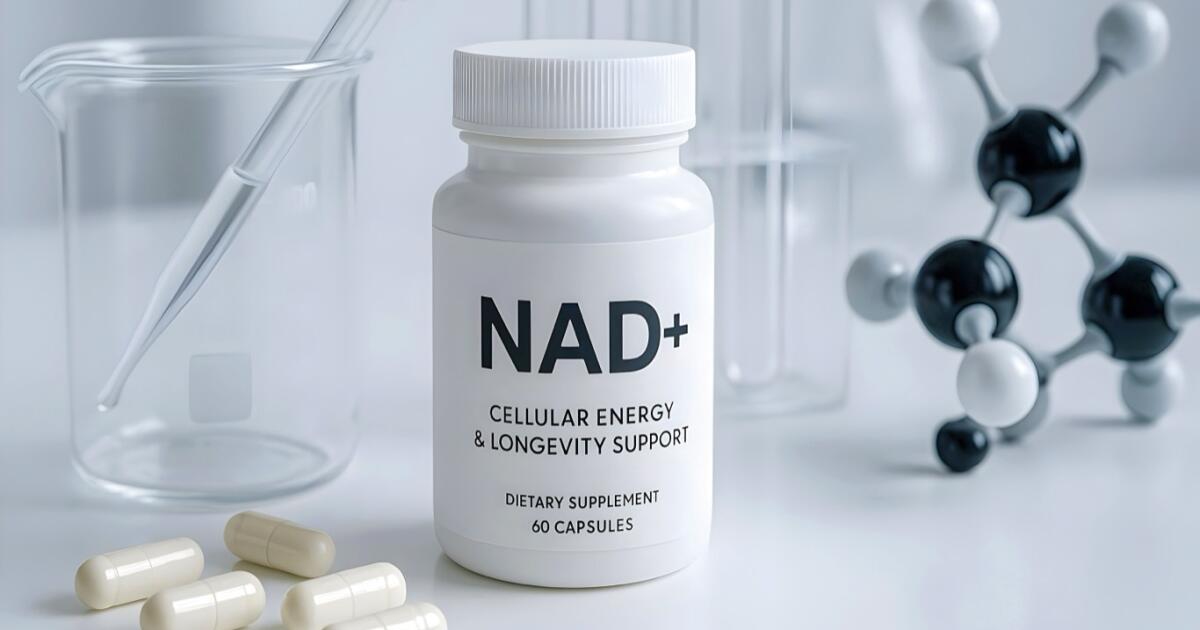
Diagnostics companies monetize advanced testing panels. Biotech firms develop senolytics and cellular therapies aimed at eliminating aging cells. Digital health platforms layer on remote monitoring and AI-driven coaching. Supplement companies position themselves around NAD+ boosters and mitochondrial optimization. The result is a vertically integrated value chain around aging.
Even tech giants are validating the space. Calico, backed by Alphabet, signaled years ago that lifespan extension was worthy of long-term capital. While Calico operates primarily in the Bay Area, its partnerships and influence ripple throughout California’s biotech network.
L.A.’s advantage lies in blending biotech with brand-building. Companies here understand consumer psychology as well as clinical science. Longevity offerings are packaged with sleek user experiences, concierge service and aspirational messaging. In many cases, these companies are positioning aging optimization as both a health decision and a lifestyle upgrade.
Demographics are the ultimate growth driver. The U.S. population over 65 continues to expand rapidly, and healthcare spending rises sharply in later decades of life. Investors see longevity not only as a way to reduce long-term healthcare costs but as a massive addressable market of consumers willing to pay for extended vitality.
Southern California venture firms have taken notice. Longevity startups are raising seed and Series A rounds focused on AI diagnostics, biological age testing, hormone optimization platforms and regenerative medicine clinics. Institutional investors are also increasingly comfortable with the regulatory and reimbursement pathways for certain diagnostics and therapies.
Importantly, the narrative has shifted from “anti-aging” to “healthspan extension.” That reframing makes the sector more credible and more aligned with preventive medicine trends. Companies that can show measurable biological age reversal – or at least slowing – are commanding premium valuations.
Risks, Regulation and the Road Ahead
Despite its momentum, longevity remains a complex and high-risk category. Many therapies remain unproven in large-scale clinical trials. Regulatory oversight varies widely, particularly in areas like stem cells and peptide therapies, and consumer-facing claims must be carefully managed to avoid overpromising.
Yet L.A.’s ecosystem – where biotech science meets entertainment-grade storytelling – may be uniquely suited to navigate those tensions. Companies here are adept at raising capital, building brand loyalty and attracting influential early adopters.
Aging is no longer treated solely as a cost center for healthcare systems. In Southern California, it has become a frontier industry. The region that once monetized dreams is now monetizing extended lifespans, turning biology itself into the next investable asset class.
L.A. Longevity Business: Healthspan Startup Investing