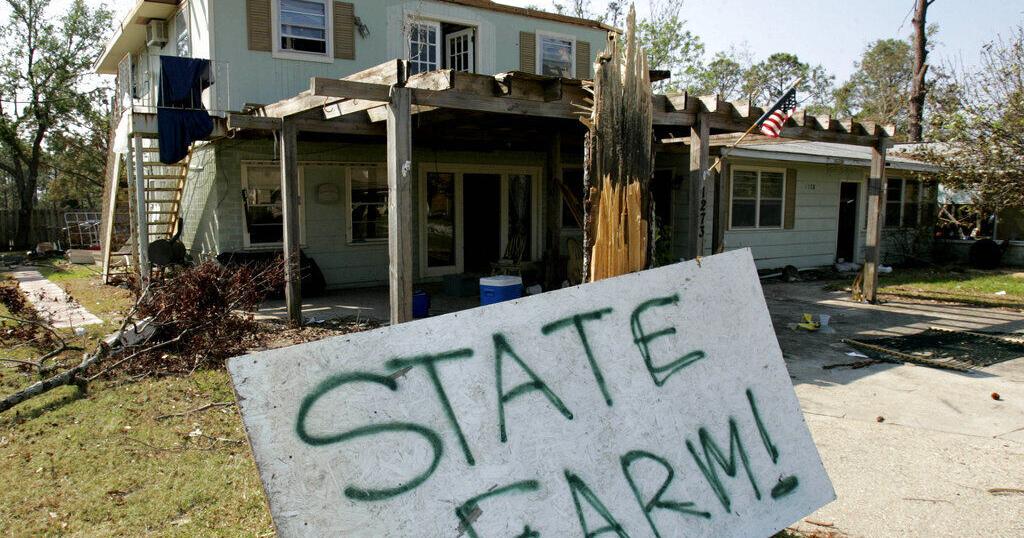
Louisiana is losing itself. About a football field an hour, the land is sliding into the Gulf while the politicians in Baton Rouge call it a market problem.
The wetlands have been going for decades, the barrier islands diminishing, the marshes pulling back, the water coming closer every season.
Jeff Landry ran for governor in 2023 promising to fix the insurance crisis, said the words at podiums and won. He signed what his office called the boldest insurance reforms in Louisiana history and presided over a period when homeowners’ premiums in Louisiana surged.
Insurers keep leaving. His reforms smoothed their exit: simpler nonrenewals, fewer restrictions, a warmer welcome to an industry that had already started writing much of Louisiana off. Policyholders with decades of clean history behind them now get notices because their ZIP code has become, on the industry’s balance sheet, a liability.
The boldest reforms in Louisiana history.
Climate is the word nobody in Baton Rouge wants to use. The storms are stronger. The coast subsides. Companies have calculated where this is going and decided to be elsewhere by the time it arrives, collecting premiums on the way out and lobbying for the exit terms on the way in.
Louisiana Citizens sits at the bottom of all this, the insurer of last resort, taking on what the private market will not, carrying a growing share of the risk it was never meant to hold on its own. When the next storm reveals the gap between what it can pay and what it owes, the public will cover it. In Louisiana, the public always does. The people who arranged things this way will not be available to comment.
Letters: The insurance crisis that no one wants to face