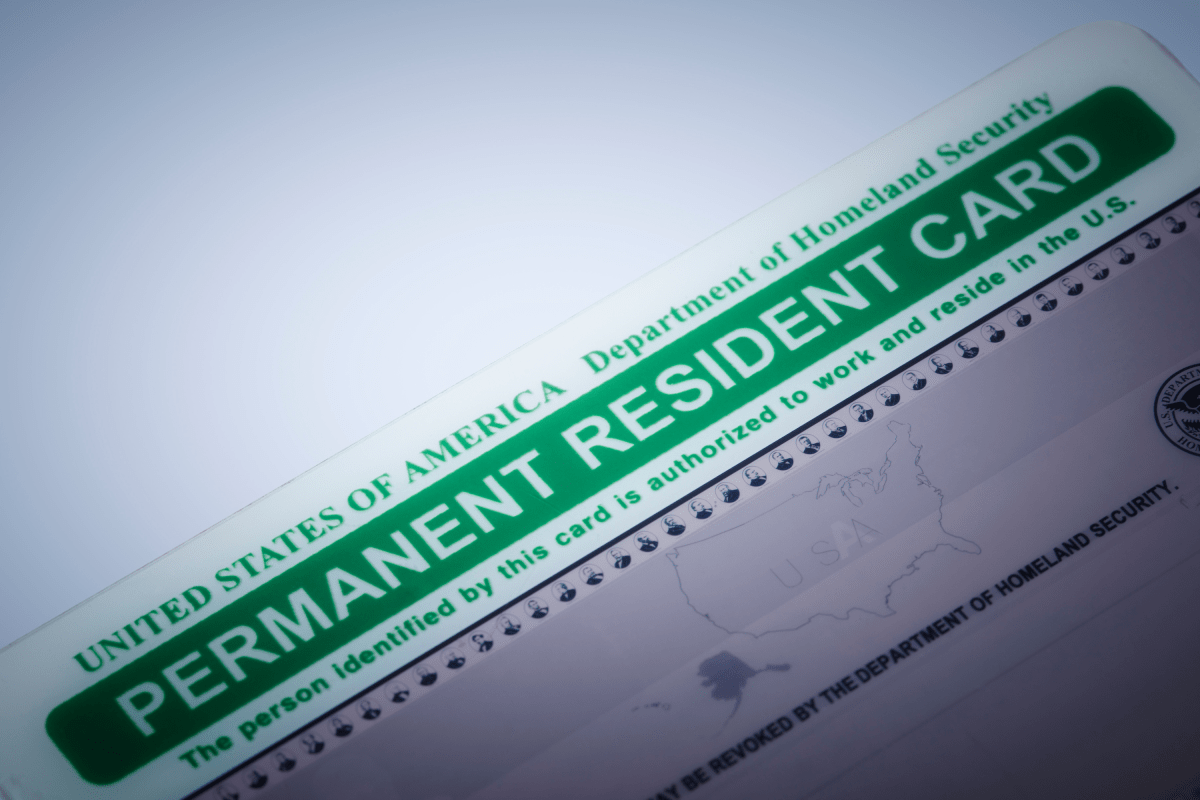
Green card holders face several policy shifts in 2026, with new rules affecting business loans, border screening and how some refugees are processed for permanent residency.
Why It Matters
Lawful permanent residents and refugees often make major decisions—financing, travel, and applications—based on stable federal rules and timelines.
Several of the changes below are set out in primary, official documents that specify effective dates and the scope of who is covered.
What To Know
Federal agencies have issued new rules and directives affecting some lawful permanent residents’ business loan eligibility, border processing, and refugee adjustment procedures, according to published government notices and memos.
1. SBA Loans Bar Green Card Holders From Ownership
The Small Business Administration (SBA) said that starting March 1, 2026, only businesses owned entirely by U.S. citizens or U.S. nationals living in the United States can qualify for SBA‑backed loans, according to a policy notice published February 2, 2026.
The same document states that, beginning on the effective date, lawful permanent residents (LPRs) “will not be eligible to own any percentage interest” in an Applicant/Borrower and related covered entities.
Under the new rule, SBA loans are only available to businesses owned entirely by U.S. citizens or nationals, excluding green card holders from ownership.
SBA’s webpage for the notice identifies the change as an “Update to SOP 50 10 8” and lists March 1, 2026, as the effective date and February 2, 2026, as the last updated date.
It states: “Consistent with 13 C.F.R. 120.100 and Executive Order 14159 ‘Protecting the American People Against Invasion,’ SBA is requiring that 100 percent of all direct and/or indirect owners of a small business applicant be U.S. Citizens or U.S. Nationals who have their Principal Residence in the United States, its territories, or possessions.”
2. Travel Now Tracked Through Entry‑Exit Biometrics
U.S. Customs and Border Protection (CBP) said the Department of Homeland Security (DHS) published a final rule titled “Collection of Biometric Data from Aliens Upon Entry to and Departure from the United States,” described as advancing the government’s biometric entry/exit program.
CBP said the rule is effective December 26, 2025, and authorizes CBP to collect facial biometrics from all noncitizens upon entry and exit at airports, land ports, seaports, and other authorized points of departure.
The Federal Register summary of the rule says DHS may require “all aliens” to be photographed when entering or exiting the United States and may require non-exempt aliens to provide other biometrics.
It states: “The final rule also amends the regulations to remove the references to pilot programs and the port limitation to permit collection of biometrics from aliens departing from airports, land ports, seaports, or any other authorized point of departure.”
“This final rule marks a major milestone towards our efforts to successfully implement the Biometric Entry/Exit mandate and strengthen the security of the United States,” said Acting Executive Assistant Commissioner, CBP Office of Field Operations, Diane J. Sabatino.
“With increased funding to support this critical mission, we will continue to expand facial biometrics and advanced technology for identity verification to further secure and innovate the entry/exit process at air, land, and sea.”
3. Some Refugees May Face Detention During Green Card Review
A DHS memorandum issued on February 18, 2026, says that refugees are only admitted to the United States temporarily at first and must be reviewed again after one year in the country.
Under the policy, refugees who have been in the U.S. for a year are required to report back to the government so officials can review their case as part of the green card process.
If a refugee does not show up on their own, the memo says DHS can arrest and detain them in order to carry out that review.
The memo also says DHS can keep the person in custody for as long as the review takes.
It notes that under earlier rules dating back to 2010, simply failing to get a green card was not considered a reason to detain a refugee. The new memo formally cancels those earlier protections.
The DHS memo states: “DHS may maintain custody for the duration of the inspection and examination process,” describing its approach to refugees at the one-year mark.
What Happens Next
The practical impact will become clearer over time as applications are reviewed under the new standards, potentially prompting legal challenges and calls for guidance.
In the meantime, businesses, travelers and refugees affected by the changes may need to reassess their plans or seek professional advice.
List of Green Card Changes Coming in 2026