“It’s the hardest job in California politics.”
That’s how Sonoma State University political science professor David McCuan summed up one of the top elected posts on the June ballot in California. He wasn’t referring to the marquee roles of governor, where a crowded field is vying to succeed Gavin Newsom, or attorney general, traditional springboards to higher office.
Insurance commissioner? Not so much.
The complex and often thankless position — locked in a perpetual wrestling match involving the insurance industry, its lobbyists, consumer watchdogs, lawmakers and the governor — has traditionally made voters’ eyes glaze over. But, as property owners contend with rising insurance rates, dropped policies and fewer options in wildfire-prone areas, this year is different, according to pundits, consumer advocates and a former insurance commissioner.
“I would say insurance is as hot a topic as it has ever been in my 30-year career,” said Amy Bach, executive director of United Policyholders, an insurance consumer advocacy group. “People always took it for granted. It was an afterthought for the vast majority of homeowners and business owners. That has really changed dramatically, and now it’s a pocketbook issue for voters, and people are very angry.”
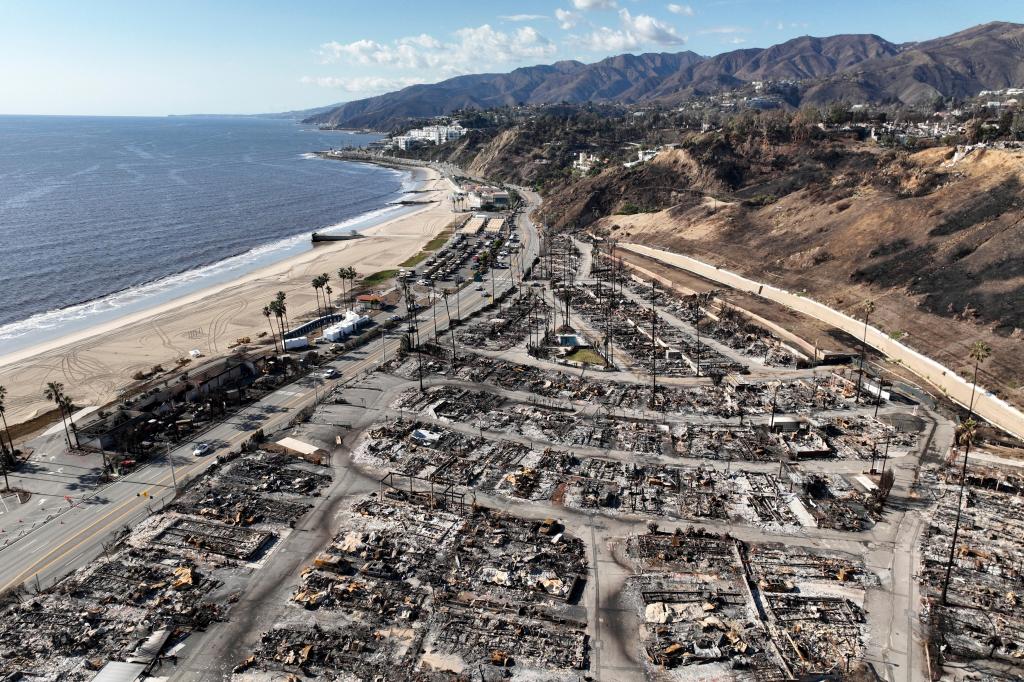
As climate-driven catastrophic wildfires and storms have driven up losses for Californians and insurers, the state’s burgeoning insurance crisis has seen insurers demanding higher rates or pulling back from coverage. Property owners have been left in impossible positions — paying required policies they can’t afford, facing non-renewals with little explanation or recourse, or even considering foregoing insurance. Meanwhile, experts warn, the ballooning FAIR Plan, California’s public insurer of last resort, is at risk of insolvency, and a year after the devastating Los Angeles wildfires that caused record-setting damage, complaints abound over delayed or denied claims that have slowed the recovery process.
“Historically, most voters don’t know who is running for insurance commissioner and are not following the office and its work very closely if at all,” said Dave Jones, who directs the Climate Risk Initiative at UC Berkeley and served as California insurance commissioner from 2011 to 2018. “Insurance touches all aspects of our lives. It’s always been important, but I think voters are going to be paying a lot more attention this election cycle because of the rate increases, the non-renewals and the underpayment of claims in (Los Angeles).”
The greater interest is reflected at least in the large and diverse pool of candidates vying this year for the spot – more than Jones said he can ever remember running.
A few have ties to fire-ravaged Los Angeles communities, like Benjamin Allen, the state senator from Santa Monica, who’s said the “front row seat to the dysfunction of our current insurance system” after the January 2025 fires inspired his run. Political newcomer Merritt Farren, a corporate attorney who lost his home in the Palisades Fire, became an advocate fighting State Farm’s recent and controversial rate hike request. Ferren, a Republican, called the insurance process “as traumatic an experience as the fire itself.”
In addition to Allen, the handful of Democrats also vying for the spot includes former state Sen. Steven Bradford, who also represented parts of Los Angeles County, and Patrick Wolff, who has decades of experience in insurance and finance but has never run for office. Wolff has said the California Department of Insurance is at once too lax in regulating insurance companies and too strict in controlling their access to the market. He blamed the system’s dysfunction on a history of politicians without relevant qualifications running for the role.
Allen and fellow Democrat Jane Kim, a civil rights attorney and former San Francisco supervisor who’s pushing a public insurance model and has backing from Sen. Bernie Sanders of Vermont, have some of the highest name recognition.
Eduardo Vargas, a socialist with the Peace and Freedom Party, has called for a public insurance system as well, paid for through a “tax on those who are responsible for the climate crisis” and the state’s wildfire disasters — the “fossil fuel industry, utility companies and their billionaire owners,” according to a candidate statement he provided to CalMatters.
On the other end of the regulatory spectrum, insurance agent Stacy Korsgaden, a Republican, has advocated a return “to free markets,” citing overregulation and insufficient wildfire prevention and mitigation as the root of the the system’s woes. Another Republican in the race, Robert Howell, who also ran for insurance commissioner in 2022, has been more critical of the insurance industry, calling for stronger oversight of insurers.
None of the Democratic candidates secured an endorsement at the party’s convention in late February. Allen won just over 40% of the ballots cast, followed closely by Kim.
The Republican Party holds its convention in April.
The top two finishers in the June 2 primary, regardless of political party, will move on to the Nov. 3 general election.
The race is “wide open,” McCuan said, but what voters are looking for is “a change in the status quo.”
Many people on both sides of the aisle have turned against the insurance industry, Bach said, especially as insurers have “dehumanized” their policy and claims processes with a turn towards technology and automation that has frustrated residents suddenly dropped or denied with little recourse. “It’s a populist issue now,” she said, and “they brought it on themselves.”
Critics say current Insurance Commissioner Ricardo Lara, who is termed out after this year, has made concessions to the insurance industry and approved massive rate hikes while failing to hold the companies accountable for slow-walking wildfire survivors’ claims payments and exploiting loopholes in policies meant to expand desperately needed coverage. He’s also faced accusations of improper spending on travel using taxpayer dollars. A group of Los Angeles fire survivors has called for his resignation.
The effects of a slate of regulatory changes, implemented by Lara, are still rolling out. Those fixes have focused primarily on incentivizing the insurance industry, allowing companies to factor future risk based on climate modeling into their rate proposals and pass through to ratepayers some of the costs of reinsurance – essentially insurance for insurers. In exchange, insurers are supposed to offer discounts to homeowners who complete wildfire mitigation work on their properties. Larger providers were mandated to offer policies in wildfire-prone areas they’ve increasingly refused to cover, although a New York Times investigation last year revealed how providers were shirking that responsibility.
“We still have an insurance market here where insurers are making money and are willing to write or renew insurance, although there are challenges, there’s no question,” Jones said. “Things are getting worse” when it comes to natural disasters, especially as President Donald Trump’s administration pulls back on efforts to address climate change, as well as federal support preparing for and recovering from its fallout.
“We’re seeing some progress, but not fast enough” and “there is still a lot of work to be done,” Bach said. “We’re right at a crossroads” and “there aren’t really easy answers.”
Whoever takes on the challenge enters a complex debate also involving the governor’s office and legislators, with competing proposals to address not just the acute problems within the insurance process but related intractable questions tied to the climate crisis.
“It’s going to have elements of government regulation and elements of a market-based solution with widespread shared risk pools,” McCuan said, and the “solutions that California comes up with have national consequences.”
For voters weighing their options, Jones said it’s important to look for candidates with “substantial policy experience working on challenging statewide issues,” ideally with a good understanding of financial or insurance markets or insurance products. “For those who want to make a difference, it’s the best job, but it’s a hard job, and it’s very complicated.”
He warned people to be leery of “candidates promising rainbows and unicorns,” at least without either recognizing or being transparent about the massive challenges.
Importantly, Jones said, independence is key. “The insurance industry is one of the biggest in the economy, and it has enormous resources and power and influence.” He would look for candidates refusing money from the insurance industry and its key players and who commit not to take a job in the sector afterwards, a common fate for those who hold the office. He cautioned voters pay particular attention to independent expenditure campaigns, run for or against candidates, scrutinizing who is behind them.
Lara in 2018 pledged not to take insurance industry money, but reporting eventually showed he took more than $50,000 in contributions from insurance executives and their spouses, which he called a mistake.
The role is not the political stepping stone that beckons some to statewide office. McCuan called it “a launching point into obscurity because it’s so hard.”
Now “it’s harder than its ever been, and they’ve got to be up for it,” Bach said.
Still, Jones said “it’s the best job I’ve ever had because you can make a real difference in people’s lives.”
You can reach senior reporter Marisa Endicott at 707-521-5470 or marisa.endicott@pressdemocrat.com. On X @marisaendicott and Facebook @InYourCornerTPD.
stakes race for insurance commissioner?