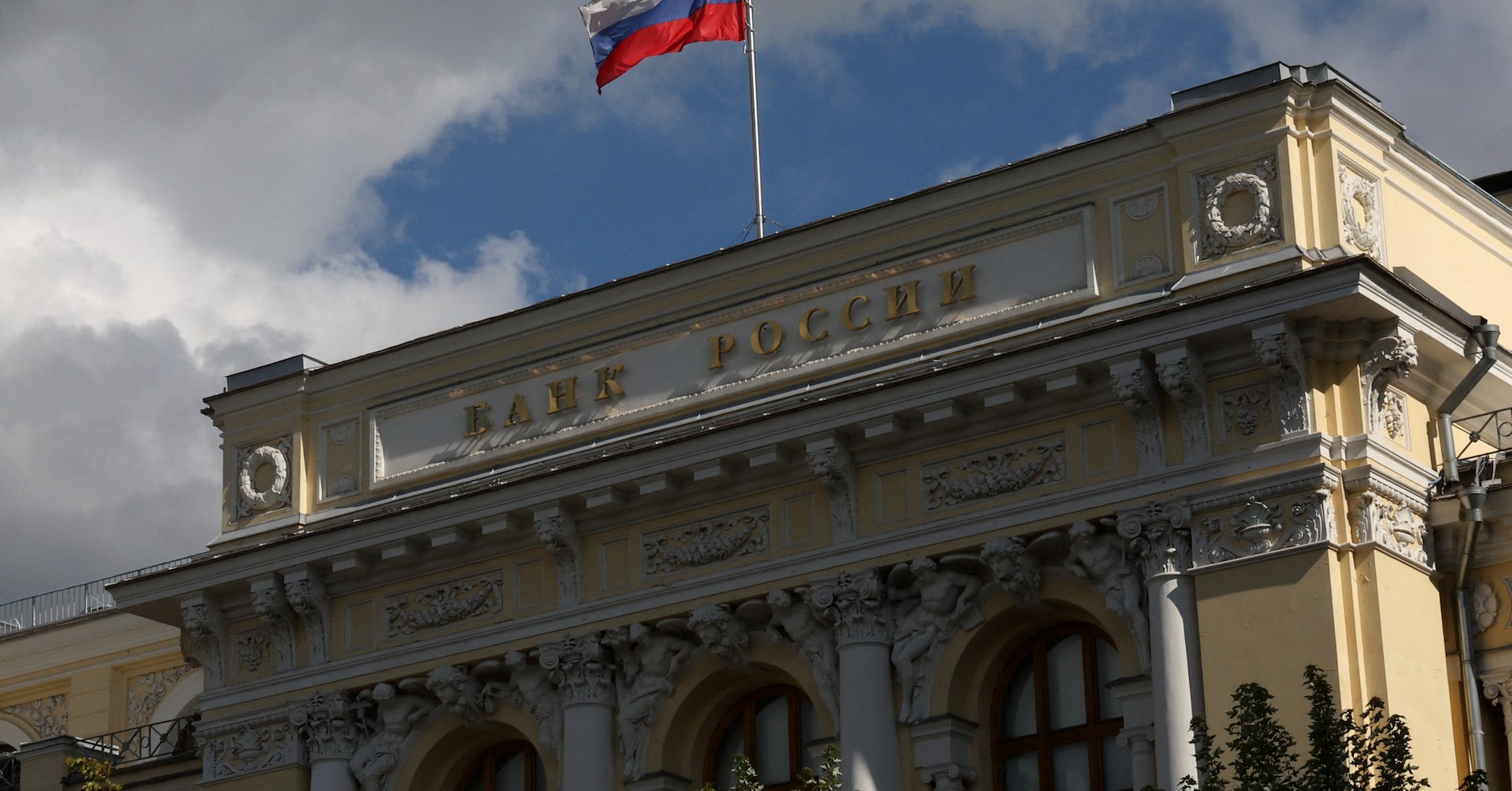
MOSCOW, Sept 22 (Reuters) – As much as $250 billion worth of Russian assets have been frozen in the European Union since the U.S. and its allies prohibited transactions with Russia’s central bank and finance ministry following Russia’s full-scale invasion of Ukraine in 2022.
Reuters reported this week that the European Union is discussing a plan to repurpose the frozen assets to boost financial aid to Ukraine, as it looks to step up sanctions pressure on Russia.
Sign up here.
WHAT ARE RUSSIA’S ASSETS AND WHERE ARE THEY?
The Russian central bank previously confirmed that it has around $300-350 billion worth of assets frozen in the West.
Like other central banks, the Russian central bank placed some of its gold and foreign exchange reserves in liquid assets such as major currencies, gold and government bonds, about half of which were held in the West at the time they were frozen.
The majority of the immobilised assets are in Europe and many have already matured and become cash held by Belgian securities repository Euroclear.
The Russian central bank has not given a detailed breakdown of what was frozen, but its data from the start of 2022 offers some insight.
Russia’s central bank held around $207 billion in euro assets, $67 billion in U.S. dollar assets and $37 billion in British pound assets.
It also had holdings comprising $36 billion of Japanese yen, $19 billion in Canadian dollars, $6 billion in Australian dollars and $1.8 billion in Singapore dollars. Its Swiss franc holdings were about $1 billion.
Russia’s central bank said these assets were mainly invested in foreign securities, bank deposits and nostro correspondent accounts.
The bank’s biggest bond holdings were in the sovereign bonds of China, Germany, France, Britain, Austria and Canada.
Russia’s gold reserves were held in Russia. Investments in yuan are held in China.
WHAT IS IN THE EU’S PROPOSAL?
The European Union has floated a plan to use Russian frozen assets to underpin a
What and where are Russia’s frozen assets in the West?